Wednesday, February 20, 2019

Bayern Munich showed all their Champions League


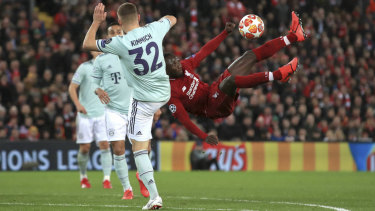
 Attempt: Naby Keita tries a novel route to goal for Liverpool in their scoreless Champions League draw at home to Bayern.
Bayern Munich showed all their Champions League experience and quality organisation as they held Liverpool to a goalless draw in the first leg of their last 16 match at Anfield on Tuesday (Wednesday AEDT).
The result leaves it all to play for in the second leg in Munich on March 13, although the German side will be without defender Joshua Kimmich who will be suspended after picking up a yellow card.
There were few clear-cut chances although Liverpool created several openings in the first half, while at the other end their goalkeeper Alisson Becker had to be alert to keep out a mis-hit clearance from Joel Matip.
The closest Jurgen Klopp's side came in the second half was a diving header from Sadio Mane in the 86th minute which Manuel Neuer pushed around the post.
Advertisement
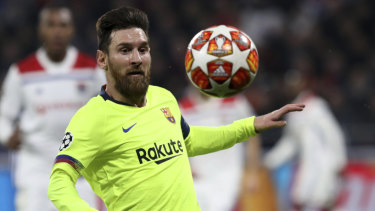
Kept quiet: Lionel Messi was unable to break through for Barcelona against Lyon. 
"You're playing an experienced team. They’ve been here and done it for five or six years," said Liverpool left-back Andy Robertson.
 "We've kept a clean sheet, could’ve scored a couple of goals but the tie is well and truly alive. If we score there it's crucial."
It was a similar story in France where Barcelona were held to a frustrating 0-0 draw at Lyon as both sides remained undefeated in this season's competiton.

The La Liga leaders dominated the match at the Groupama Stadium but lacked accuracy up front and were grateful to their goalkeeper Marc Andre ter Stegen who made two great saves.
Lyon were lively in the first half but ran out of steam after the break and were holding on in the closing stages as Lionel Messi tried in vain to open up the home defence.
"We could have done better in the first half and converted our chances but we did not concede a goal so our chances are intact," said Lyon defender Leo Dubois.

It was a great result - Manchester City a 3-2 win at Schalke 04

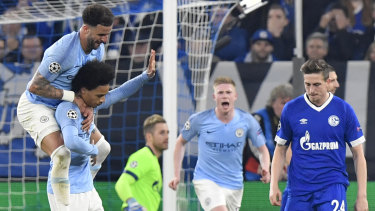
Gelsenkirchen: Late goals from Leroy Sane and Raheem Sterling gave Manchester City a 3-2 win at Schalke 04 in their Champions League round-of-16 first leg on Thursday (AEDT) that put the English side in the driving seat.
Substitute Sane scored against his former club with a sensational free kick in the 86th after Nabil Bentaleb converted two spot kicks in the 38th and 45th minutes to put Schalke ahead.

Leroy Sane (hand raised) celebrates his goal for Manchester City against Schalke 04. 
Sergio Aguero had given City the lead in the 18th and the English champions were left with 10 men in the 68th minute when Nicolas Otamendi was sent off following a second booking.

City, who have conceded at least two goals in six of their seven games in the Champions League knockout stages under Pep Guardiola, will also be without yellow-carded Fernandinho for the return leg in Manchester on March 12.


Pep Guardiola was far from happy after the match, particularly after the two penalties his team conceded in seven minutes.
"It was a great result. We gave the first penalty, we gave the second penalty, we gave the red card, so that is not good," Guardiola told reporters.

"So still we are not ready to fight for the final stages [of the competition]. That is the reality. We played good but we lost some easy balls, which you are not allowed to do in this competition. And we conceded two penalties.
"It was like last season at Anfield [against Liverpool] when we lost 3-0. We gave away two goals when they [Schalke] didn't do absolutely anything … The game was quite good at the end [with] the quality from Leroy. The big players win you this kind of game."
City's Champions League record is far less illustrious than their recent Premier League one, having reached the semi-finals only once - during the 2015-16 campaign.
"We have been through some difficult patches this season," said Sterling. "Not every game is going to be 2 or 3-0. We are going to be under pressure in the Champions League but we stuck with it and got our reward.
"We have got the leg at home. We have got to go and look at ourselves and be better than tonight."
Meanwhile, Atletico Madrid have beaten Juventus 2-0 to take control of their Champions League last-16 tie.
Centre-backs Jose Maria Gimenez and Diego Godin scored Atletico’s goals from set pieces in the space of five second-half minutes to earn Diego Simeone’s side a deserved victory at the Wanda Metropolitano.

Wednesday, February 13, 2019

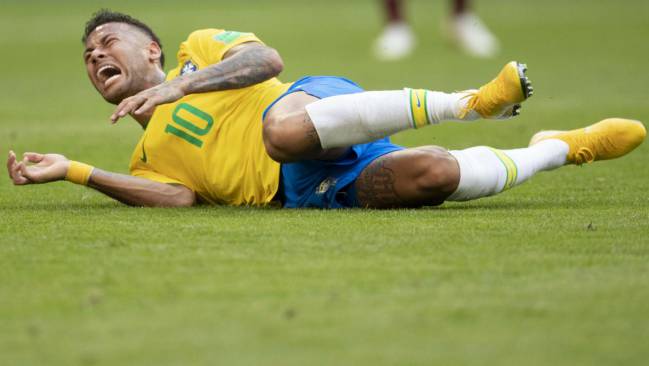
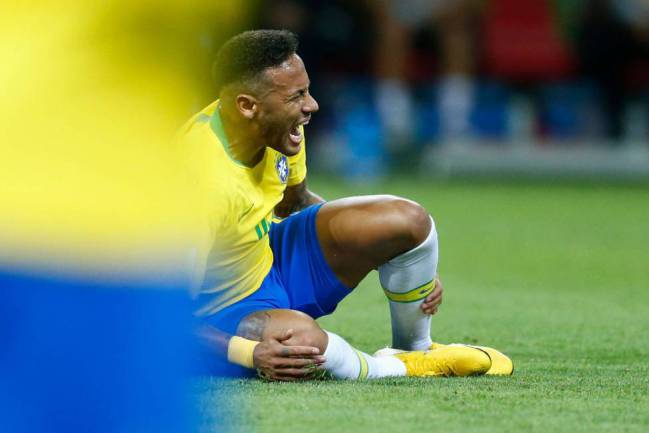
Neymar was criticised for perceived theatrics at the World Cup


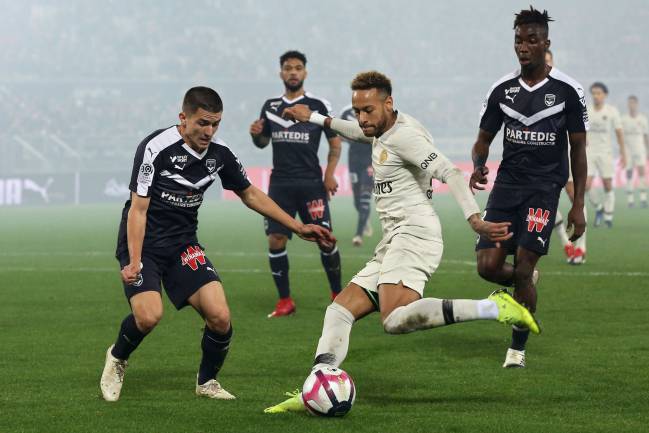
Pelé says he finds it difficult to defend Neymar from criticism over what is perceived as excessive simulation and has urged the Paris Saint-Germain striker to make the most of his ability. Brazil superstar Neymarcame under fire for his on-field theatrics at the 2018 World Cup, where the Seleção were beaten in the quarter-finals by Belgium.

Overegging it on the pitch

Three-time World Cup winner Pelé has spoken to Neymar, a former Santos player like himself, about his actions, which he finds it tough to reconcile.
"It's difficult to defend Neymar for all the things he does besides playing football. I spoke with him and reminded him of his ability," he told Folha de São Paulo. "He was unlucky because Brazil did not win the World Cup and he was singled out. I've been with him in Europe twice. We talked and I explained: 'The God of football gave you the gift. What you do complicates it.'"


better than Mbappé

Pelé believes Neymar is a better player than his fellow PSG forward Kylian Mbappé, who won the Best Young Player award as France triumphed at Russia 2018Mbappé became the first teenager to score in a World Cup final since Pelé in 1958 - a feat only ever achieved by the legendary Brazilian.
"People compare me with Mbappé and there are similarities, right? But he is already 19. He won the World Cup," said Pelé. "I think Neymar is a more complete player than him, but in Europe everyone speaks more about Mbappe."

Thursday, July 5, 2012

No Wales sanction for Olympic four

Wales captain Aaron Ramsey

Aaron Ramsey and his Wales team-mates will face no repercussions over their involvement in the GB Olympic team, the Football Association of Wales has said.

Ramsey, Craig Bellamy, Joe Allen and Neil Taylor have defied the FAW's wish by agreeing to play at London 2012.

The FAW oppose Team GB, fearing it could threaten Wales' independence.

But chief executive Jonathan Ford said: "We've always made it very clear, we're not going to put any sanctions on any players."

Former Wales captain Ryan Giggs takes the Welsh contingent in the 18-man GB squad to five, selected alongside Bellamy as one of three players allowed over the age of 23.

Team GB's Group A Olympic 2012 fixtures

  • 26 July: v Senegal at Old Trafford, Manchester
  • 29 July: v United Arab Emirates at Wembley, London
  • 1 August: v Uruguay at Millennium Stadium, Cardiff

Gareth Bale was also set to be involved but a back injury has prevented the Tottenham Hotspur winger from taking part.

The four involved face the possibility of another kind of sanction, though, as suspensions from red cards not served during the Olympics will be carried over to the next competitive Wales game.

With no players selected, Scotland and Northern Ireland will be unaffected for their World Cup qualifiers in September, while no English player in the Olympic squad featured in Roy Hodgson plans for Euro 2012.

That leaves Ramsey, Bellamy, Allen and Taylor treading a disciplinary tightrope as they aim for an Olympic medal.

Ford added: "It was always their decision. They knew where we stood.

"Ultimately they were able to make the decision themselves and let's just hope they come back to us fighting fit for our World Cup qualifiers in September."

Wales begin preparations for those World Cup qualifiers in August with a friendly against Bosnia-Hercegovina in Llanelli on 15 August, four days after the men's Olympic final at Wembley Stadium

Chris Coleman's men will welcome Belgium to Cardiff on 7 September in the opening qualifier for Brazil 2014, before facing Serbia away four days later.

Ford said he wished the Welsh players well at the Olympics but said the tournament, which includes a Great Britain team for the first time since 1960, would never come near to the prestige of international football's two major events.

"I'm pretty damn sure there's no player that would give up the Fifa World Cup winners' medal or a Uefa European Championship winners' medal for an [Olympic] gold medal," he said.

"I'm pretty damn sure that's the pinnacle of our sport and that's unfortunately something that will always stay."

If Ronaldo wins this for Portugal, it will be the best we've seen

If Portugal, by some miracle, are crowned champions of Europe next Sunday, it will be an achievement to eclipse even Greece’s triumph against the odds at the equivalent tournament in 2004.

Denmark’s victory from the beach in 1992 will not compare, either, nor various Italian World Cup successes that always seem to come when their domestic game is in disarray.

For a Portuguese win in Kiev would be, in essence, the work of one man. Cristiano Ronaldo would have won the 2012 European Championship.

Not literally, but metaphorically.

Going it alone: Ronaldo attempts an overhead kick against Czech Republic

Going it alone: Ronaldo attempts an overhead kick against Czech Republic

Euro 2012 email button

Take him away, and it isn’t just that Portugal would not be in Wednesday’s semi-final with Spain; they would not be at the party, full stop.

No narrative here is quite as mesmerising as Ronaldo’s quest for glory. We have to search through almost three decades for a precedent, and to another figure who polarised opinion. This is Ronaldo’s 1986 World Cup; and he is this tournament’s Diego Maradona.

For Portugal to win here, overcoming first Spain and then in all likelihood Germany in the final, it is going to take the greatest feat of individual influence since Maradona made Argentina champions of the world in Mexico.

Sometimes an individual is stronger than the whole: Robin van Persie propelled Arsenal into the Champions League last season and Matt Le Tissier spent his career keeping Southampton up, but it is hard to remember the last time a country went so far into a major international event on the instincts of one majestic player.

Portugal squeaked here by the narrowest margin as it was: finishing second in qualifying Group H on goal difference from third-placed Norway.

The campaign began badly. Portugal drew 4-4 with Cyprus at home, then lost away in Oslo, both without Ronaldo.

Leading the way: Maradona lifts the World Cup in 1986

Leading the way: Maradona lifts the World Cup in 1986

At this point Carlos Queiroz, Sir Alex Ferguson’s former assistant at Manchester United, was sacked as coach and replaced by Paulo Bento, since when, the story goes, Portugal have never looked back.

Yeah right. Portugal could have been coached by Fray Bentos - it means Friar Benedict and, yes, he did exist - and it wouldn’t have made the slightest bit of difference without Ronaldo’s return. Undoubtedly, Bento is getting more from his best player than Queiroz did and for this he deserves credit - but the fact remains that without Ronaldo he would have been powerless.

Portugal, like Manchester United, like Real Madrid, are transformed by his presence. There is nobody quite like him in the game today; no player who can hit a shot that just by its flight identifies him as the shooter.

The ball looks different when Ronaldo strikes it, taking on a unique yet familiar trajectory that starts low, rises, and then sharply dips like a bucking stallion.

The greats have contributed turns and tricks to football’s evolution but Ronaldo is arguably the first player in history to as good as trademark a talent as commonplace as shooting. Ferguson insists it’s only practice.

He must spend hours.

Dedicated: Ronaldo juggles a ball during training in Poznan

Dedicated: Ronaldo juggles a ball during training in Poznan

So, in this campaign, Ronaldo’s return coincided with Bento’s appointment and in the next 12 competitive games - eight qualifiers, four in these finals - Portugal have lost once and he has scored 10 goals and made three others.

Remove him and, without doubt, Norway would have finished runners-up to Denmark and played Bosnia-Herzegovina for Portugal’s place.

Teams featuring Ronaldo, however, do not miss out on goal difference. Manchester United would have won the Premier League last season had he still been at the club. So having dragged Portugal east, he has steered them out of the group (both goals in a 2-1 win over Holland) and through the quarter-finals (the only goal of the game against the Czech Republic). It has been a tour de force, an act like no other in world football right now.

Lionel Messi is surrounded by great players wherever he goes. Yet the moment Helder Postiga - 12 appearances for Tottenham Hotspur in 2003-04, two goals, sold after 12 months at a loss of £3.63m - appears to lead Portugal’s line, it is obvious the task Ronaldo faces.

His match-winning attempts are almost comical in their desperate intensity. He has had 29 shots in this tournament - 14 on target - which is more than Greece over four matches. Approximately every 12.5 minutes, Ronaldo has a crack. You would, too, if Postiga was your match-winner.

Of course, Maradona’s statistics from 1986 are simply mind-blowing.

Indebted: Paulo Bento (right) has Ronaldo to thank for his success

Indebted: Paulo Bento (right) has Ronaldo to thank for his success

'This is Ronaldo’s stage, Ronaldo’s time, and if he can be Portugal’s Maradona, the debate about the world’s greatest footballer will open wide again'

He played every minute of every game and of Argentina’s 14 goals, scored five and made as many, having a hand in all three in the final. He attempted or created more than half of Argentina’s shots at goal, made 90 dribbling runs (three times more than any other player) and was fouled 53 times (winning twice as many free-kicks as any rival).

His second against England was tagged the goal of the century and a statue celebrates it outside Mexico City’s Azteca Stadium.

Ronaldo has a way to go before matching that roll of honour, yet time has also helped Maradona’s legend grow. It is now said that he was the lone talent in Argentina’s World Cup-winning team, but he is not as isolated as Ronaldo is now.

Argentina 1986 would have murdered Portugal 2012. They were not a stellar side, and Maradona’s gift would have eclipsed many far greater, but were better than is widely recalled.

Argentina let just five goals in over 630 minutes in that tournament and kept three clean sheets.
Oscar Ruggeri is still regarded as one of the greatest defenders the country has produced.

Jorge Valdano had won a league and UEFA Cup double that season with Real Madrid; six of the Argentina starting 11 in the final had won the Copa Libertadores, the highest honour in South American club football - and Maradona wasn’t one of them.

Three and easy: Ronaldo's goals saw off Holland and Greece

Three and easy: Ronaldo's goals saw off Holland and Greece

What is Ronaldo working with by comparison?

Some fine players, not least Joao Moutinho, but their worth without him was revealed when the qualifying campaign began.

Drawn in the toughest group here, with Germany, Holland and Denmark, few expected even Ronaldo’s inspiration to be enough to get Portugal to the knockout rounds.

And it looked that way, at first, with the pressure at its height.

Facing Germany in the opening game, it must have appeared a daunting task to thrust this team into the later stages.

Maybe this is why Ronaldo started slowly, improving as the tournament wore on.

The final group game with Holland was a straightforward knockout, so too the quarter-final against the Czech Republic. And knockouts he can influence simply by being the greatest player on the field.
Orchestrating the entire campaign, a run of six matches viewed uphill from the foot of the toughest group, must have appeared more intimidating.

Incumbent: Messi is widely regarded as the current best player in the world

Incumbent: Messi is widely regarded as the current best player in the world

He is two away now, though, and getting stronger.

Logic suggests the quest must end in the Donbass Arena against Spain, that one man cannot ride the famous passing carousel and win.

Yet Spain are not Barcelona.

Ronaldo will be well aware who is missing and the point he has to prove. Sandro Rosell, president of Barcelona, said the club have an entire team with more talent than Real Madrid’s Ronaldo.

But they haven’t. They’ve got one guy who is arguably better. And he’s not here. So this is Ronaldo’s stage, Ronaldo’s time, and if he can be Portugal’s Maradona, the debate about the world’s greatest footballer will open wide again.

For frankly, without Ronaldo, Portugal would have about as much chance of winning this European Championship as Lionel Messi.

Two steps away: Portugal take on Spain on Wednesday night
Two steps away: Portugal take on Spain on Wednesday night

David Beckham left out for football reasons - Stuart Pearce

Stuart Pearce says his decision not to pick David Beckham in his Team GB squad for London 2012 was made purely for football reasons, and stressed he would not pick any player based on sentiment.

Continue reading the main story

Right through this process I have had carte blanche to pick whatever players I regard as best.

Stuart Pearce

Pearce has named his 18-man squad, leaving out Beckham as expected.

"Form plays a big part and I don't think there is a manager around who picks on sentiment," he said.

"I have to be comfortable when I have made decisions based solely on football grounds alone, nothing else."

Pearce also ruled out any possibility of using Beckham in a coaching capacity, although the British Olympic Association (BOA) has been in touch with the Los Angeles Galaxy midfielder's representatives about a possible Games role.

"We only have seven passes [for backroom staff]. We have no passes for that," added Pearce.

"The players have to be prepared to come through the door on form alone and that happens to be the case with staffing too. They have their role to play."

BOA chef de mission Andy Hunt said it would be "fantastic" to have Beckham involved in some capacity.

He said: "We'd be delighted and honoured to have David Beckham related to Team GB more broadly.

"That would be fantastic. I've made contact with his representatives over the weekend and we'll see how that moves forward."

It had long been anticipated that Beckham would be included as one of the three overage players in the squad following his prominent role in promoting London 2012.

But Pearce instead opted for Craig Bellamy, Ryan Giggs and Micah Richards - three players the England Under-21 manager believes will give Team GB their best chance of winning a medal.

Pearce said he made it clear when he was appointed that he would only pick players based on merit, and would not have taken the job if he was not in full control over squad selection.

Team GB football squad

Goalkeepers: Jack Butland (England), Jason Steele (England)

Defenders: Ryan Bertrand (England), Steven Caulker (England), Craig Dawson (England), Micah Richards (England), Danny Rose (England), Neil Taylor (Wales), James Tomkins (England)

Midfielders: Joe Allen (Wales), Tom Cleverley (England), Jack Cork (England), Ryan Giggs (Wales), Aaron Ramsey (Wales), Scott Sinclair (England)

Forwards: Craig Bellamy (Wales), Marvin Sordell (England), Daniel Sturridge (England)

"From the offset, when I sat down with the [Football Association] chairman David Bernstein, some time before Christmas, he offered me the opportunity to pick the squad," he said.

"If at that stage he had said to me that certain individuals would have to be included I certainly wouldn't do that job. I don't know any manager worth their salt who would have.

"Right through this process I have had carte blanche to pick whatever players I regard as best.

"I do enough hours watching matches and I think I've done due diligence on all the players here."

The Team GB squad is made up of 13 Englishmen and five Welsh players, with no representatives from either Scotland or Northern Ireland.

"I've got a list of names written down now, who I think ability-wise are good enough to do a job," said Pearce.

"I didn't pick on personality, I didn't pick on ticket sales and I certainly wasn't picking on nationality."

David Beckham left out for football reasons - Stuart Pearce

Stuart Pearce says his decision not to pick David Beckham in his Team GB squad for London 2012 was made purely for football reasons, and stressed he would not pick any player based on sentiment.

Continue reading the main story

Right through this process I have had carte blanche to pick whatever players I regard as best.

Stuart Pearce

Pearce has named his 18-man squad, leaving out Beckham as expected.

"Form plays a big part and I don't think there is a manager around who picks on sentiment," he said.

"I have to be comfortable when I have made decisions based solely on football grounds alone, nothing else."

Pearce also ruled out any possibility of using Beckham in a coaching capacity, although the British Olympic Association (BOA) has been in touch with the Los Angeles Galaxy midfielder's representatives about a possible Games role.

"We only have seven passes [for backroom staff]. We have no passes for that," added Pearce.

"The players have to be prepared to come through the door on form alone and that happens to be the case with staffing too. They have their role to play."

BOA chef de mission Andy Hunt said it would be "fantastic" to have Beckham involved in some capacity.

He said: "We'd be delighted and honoured to have David Beckham related to Team GB more broadly.

"That would be fantastic. I've made contact with his representatives over the weekend and we'll see how that moves forward."

It had long been anticipated that Beckham would be included as one of the three overage players in the squad following his prominent role in promoting London 2012.

But Pearce instead opted for Craig Bellamy, Ryan Giggs and Micah Richards - three players the England Under-21 manager believes will give Team GB their best chance of winning a medal.

Pearce said he made it clear when he was appointed that he would only pick players based on merit, and would not have taken the job if he was not in full control over squad selection.

Team GB football squad

Goalkeepers: Jack Butland (England), Jason Steele (England)

Defenders: Ryan Bertrand (England), Steven Caulker (England), Craig Dawson (England), Micah Richards (England), Danny Rose (England), Neil Taylor (Wales), James Tomkins (England)

Midfielders: Joe Allen (Wales), Tom Cleverley (England), Jack Cork (England), Ryan Giggs (Wales), Aaron Ramsey (Wales), Scott Sinclair (England)

Forwards: Craig Bellamy (Wales), Marvin Sordell (England), Daniel Sturridge (England)

"From the offset, when I sat down with the [Football Association] chairman David Bernstein, some time before Christmas, he offered me the opportunity to pick the squad," he said.

"If at that stage he had said to me that certain individuals would have to be included I certainly wouldn't do that job. I don't know any manager worth their salt who would have.

"Right through this process I have had carte blanche to pick whatever players I regard as best.

"I do enough hours watching matches and I think I've done due diligence on all the players here."

The Team GB squad is made up of 13 Englishmen and five Welsh players, with no representatives from either Scotland or Northern Ireland.

"I've got a list of names written down now, who I think ability-wise are good enough to do a job," said Pearce.

"I didn't pick on personality, I didn't pick on ticket sales and I certainly wasn't picking on nationality."

Cesare Prandelli says Italy will learn from Spain defeat

Cesare Prandelli consoles Mario Balotelli

Italy coach Cesare Prandelli admitted his side were comprehensively outplayed in the final of Euro 2012, but insisted they will learn from the experience.

The Italians succumbed to two goals in each half to slip to a 4-0 defeat, the worst scoreline in a final in European Championships history.

"They totally dominated this evening," Prandelli conceded.

However, the 54-year-old manager added: "You can grow from the experience. I am very proud of my team."

These are experiences you have to deal with and have to accept

Cesare Prandelli Italy coach

Italy competed bravely in over 90 minutes but were undone by strikes from David Silva and Jordi Alba and, late on, Fernando Torres and Juan Mata.

Substitute Thiago Motta also suffered a hamstring strain and Italy, who had already introduced their three replacements, were left to battle with 10 men for the last half hour.

One-time Roma and Fiorentina boss Prandelli admitted: "Perhaps we could have got back into the game at the start of the second half, we had two chances but of course once Thiago Motta went off injured, we didn't have anything left in the tank."

And he was pragmatic at full-time: "You have to hold your hands up and say the opponents were better, accept defeat.

"We have to congratulate a great side for their victory."

Spain had a extra 24 hours to rest and prepare for the final after defeating neighbours Portugal on penalties on Wednesday, while Italy overcame Germany 2-1 on Thursday.

Prandelli, who will lead Italy into their 2014 World Cup qualifying campaign from the autumn, bemoaned the day's difference, but admitted his side were second best.

"Against a team like Spain I think you really need to be good in the tackle and fit," he said.

"We've had a terrific European Championship. The only regret is the fact we didn't have a few extra days to rest up before this game."

Use accessible player and disable flyout menus
Spain lift Euro 2012 trophy

Euro 2012 highlights: Spain 4-0 Italy

At the final whistle a number of Italy players, including experienced midfielder Andre Pirlo, were seen shedding tears of disappointment.

Manchester City striker Mario Balotelli left the field in obvious frustration before returning later to claim his runners-up medal for the tournament, but Prandelli stated that the defeat will provide valuable international experience for his squad.

"I told Mario that these are experiences you have to deal with and have to accept," said Prandelli.

"You also have to make sure this helps you going forward and you can grow from the experience.

"This has happened to a number of players, and will happen again, but this is what sport is all about."

Senegal want Newcastle's Papiss Cisse for Olympics

Newcastle manager Alan Pardew (left) celebrates with Senegal's Papiss Demba Cisse

Newcastle United manager Alan Pardew says he is in talks with the Senegal Football Federation (FSF) about releasing Papiss Demba Cisse to play at this month's Olympics.

Pardew says the talks are currently only about Cisse and not his strike partner and compatriot Demba Ba.

"We have a debate about the Olympics as [he is an] overage player of course and we have to give our permission for that," Pardew told BBC Sport.

"So we're kind of discussing that."

Senegal's games at the Olympics

  • 26 July: v Great Britain, Manchester
  • 29 July: v Uruguay, London
  • 1 August: v UAE, Coventry

Countries have until 9 July to name their 18-man squads and are allowed to include a maximum of three players over 23.

Fifa regulations say under-23 players must be released for the tournament but over-age players need to get permission from their clubs to play.

Pardew is reluctant to lose either player ahead of the new English Premier League season.

"It's just awkward as we want to prepare our team for a very difficult season for us," he said.

"We have the Premier League and the Europa League. That's a tough extra 18 games if we get to the final.

Both Cisse and Ba were key members of Pardew's squad last season, Ba scoring 15 goals before he went to the Africa Cup of Nations and Cisse grabbing 13 goals in 14 matches after he signed for the club in January.

Senegal, who qualified for the Games with a play-off victory over Oman, begin their Olympic campaign against hosts Great Britain on 26 July before facing Uruguay and the United Arab Emirates.

The Senegalese are making their debut at the Olympics and will look to emulate Ghana, Nigeria and Cameroon, who have all won medals for Africa in the past.

trio Mata, Alba , Martinez in Spain Olympic squad

Juan Mata (right) lifts the Henri Delaunay trophy

Spain have selected Euro 2012 winners Juan Mata, Jordi Alba and Javi Martinez in their 22-man squad for this summer's Olympic Games in London.

Chelsea midfielder Mata and Barcelona-bound full-back Alba, both scored in Sunday's 4-0 final win over Italy.

Spain Olympics squad

David De Gea (Manchester United), Diego Marino (Villarreal), Joel Robles (Atletico Madrid); Jordi Alba (Valencia/Barcelona), Cesar Azpilicueta (Marseille), Alberto Botia (Sporting Gijon), Alvaro Dominguez (Borussia Monchengladbach), Inigo Martinez (Real Sociedad), Javi Martinez and Mikel San Jose (both Athletic Bilbao), Martin Montoya (Barcelona); Thiago Alcantara and Cristian Tello (both Barcelona), Ander Herrera (Athletic Bilbao), Isco (Malaga), Koke (Atletico Madrid), Juan Mata and Oriol Romeu (both Chelsea); Adrian Lopez (Atletico Madrid), Iker Muniain (Athletic Bilbao), Rodrigo (Benfica), Alvaro Vazquez (Espanyol).

Mata's club-mate Oriol Romeu and Manchester United goalkeeper David De Gea are also selected in Luis Milla's squad, which will be reduced to 18.

Barcelona's Martin Montoya, Cristian Tello and Thiago Alcantara are also in.

Mata, 24, and Athletic Bilbao midfielder Martinez, 23, are both over-age picks, along with Atletico Madrid's 24-year-old forward Adrian Lopez.

World champions Spain became the first side to retain the European title with victory in Kiev, and in the process made history by winning three successive major tournaments.

Milla named his squad the day after Mata, Alba and Martinez were involved in a huge homecoming celebration as the Spanish team paraded the Henri Delaunay trophy through the streets of Madrid.

"I believe it would be unfair to demand that this team be at the same level as the full national team," said Milla.

Use accessible player and disable flyout menus
Jordi Alba scores against Italy

Jordi Alba doubles Spain's lead

"This team has character and a similar playing philosophy but it is a different team under different pressures."

The Olympic squad will join up on Friday and will face Senegal (13 July) and Mexico (18 July) in friendlies before heading to London for the Games, where they have been drawn in Group D along with Japan, Honduras and Morocco.

Switzerland have also named a number of senior internationals for the Olympics.

Wolfsburg goalkeeper Diego Benaglio, Fiorentina's former West Ham midfielder Valon Behrami and Nuremburg defender Timm Klose were all picked in the 18-man squad as over-aged players.

Fulham's Pajtim Kasami and Aston Villa goalkeeper Benjamin Siegrist are also selected.

Spain's Olympic schedule

  • 26 July v Japan
  • 29 July v Honduras
  • 1 August v Morocco

However, forward Xherdan Shaqiri was left out after Switzerland agreed with Bayern Munich, who the player joined this summer from Basel, not to select the 20-year-old.

Switzerland are in Group B and will face Mexico, South Korea and Gabon.

The French Revolution

The France squad celebrate victory at Euro 2000

Euro 2000: The French Revolution

Euro 2000 was awash with orange, but ultimately the tournament was all about Les Bleus.

The streets and stadiums of the Netherlands, co-hosts along with Belgium, were dominated by the brightly adorned hordes of the Dutch Oranje Army, but on the pitch Roger Lemerre's France were dominant.

Having won the World Cup on their own turf two years previously, the French came into Euro 2000 with a single aim: to set a football precedent by adding the Henri Delaunay Trophy to their global crown. They did not disappoint.

Former Arsenal, Barcelona and Chelsea midfielder Emmanuel Petit, a prominent member of the French squad at the turn of the millennium, told BBC Sport: "Euro 2000 was a big target for us because it meant we could print our name on football history.

Euro 2000 logo
  • The tournament was the 11th European Championship.
  • It was the first to be co-hosted (between the Netherlands and Belgium).
  • The 31 games produced 85 goals at an average of 2.74 goals-per-game.
  • Yugoslavia featured in both highest scoring games, losing 4-3 to Spain in the group stage and 6-1 to Netherlands in the quarters.
  • Two players top-scored with five goals: Patrick Kluivert (Netherlands) and Savo Milosevic (Yugoslavia).
  • France's Zinedine Zidane was named player of the tournament.
  • Team of the tournament: Toldo, Cannavaro, Maldini (all Italy), Blanc, Thuram, Vieira, Zidane (all France), Figo (Portugal), Davids, Kluivert (both Netherlands), Totti (Italy).
  • Four sets of brothers featured in the finals: Phil and Gary Neville (England), Patrick and Daniel Andersson (Sweden), Frank and Ronald de Boer (Netherlands), Emile and Mbo Mpenza (Belgium).

"Winning the World Cup is a huge achievement, but when you can complete the double you can put your name in the football hall of fame. We wanted to make history."

France's Euro 2000 squad was stronger and more experienced all-round than their World Cup-winning one, built around Laurent Blanc, Marcel Desailly and Didier Deschamps and the excellence of a peaking Zinedine Zidane.

In 1998, it was widely accepted Aime Jacquet succeeded without a world-class striker at his disposal, but two years later Lemerre had three to choose from - Thierry Henry, David Trezeguet and Nicolas Anelka.

"We had unity. We were all connected. We had knowledge from the players in terms of movement and how to adapt in different situations. There was solidarity between us," explains Petit.

"If you look at the first XI at that time, I suppose eight of those players were the best in the world in their position. But it was all about the team, not individual players.

"One of the most important things was the players in the squad played for some of the biggest clubs in Europe, so we got used to the pressure and the expectations - it gave us the strength mentally to reach our targets.

"Everything was in place at the right time to give us a chance to win the World Cup and then Euro 2000."

On home soil in 1998, France hoped for success, but in 2000 it was expected. This was something the squad had to shoulder and, as Petit explains, ultimately turned to their advantage.

"We had a strong pressure on our shoulders but it was also a good pressure," he said.

"All the French people wanted to make history so we felt their wind at our backs. We were given their love, which is one of the strongest things they can do for us."

Euro 2000 was a tournament that deserved a quality winner.

ENGLAND AT EURO 2000

England's Alan Shearer
  • England are drawn in Group A along with Germany, Portugal and Romania.
  • Paul Scholes and Steve McManaman put them 2-0 up in 18 minutes in their opening fixture against Portugal, but Luis Figo, Joao Pinto and Nuno Gomes consign England to defeat.
  • Alan Shearer raises hopes as his second-half goal is enough to beat Germany.
  • A Shearer penalty and Michael Owen goal give England 2-1 lead over Romania after Cristian Chivu's opener, but Dorinel Munteanu's goal and Ionel Ganea's last-minute penalty send the Romanians through and Kevin Keegan's team out.
  • Scotland, Wales & Northern Ireland all failed to qualify

Major international football events very rarely live up to the hype - but this delivered in full, as attacking philosophies largely came to the fore in a flurry of goals and entertainment.

There were poor teams but very few poor games.

England and Germany were two of the worst on show. The former, led by Kevin Keegan, registered a rare victory over the latter in a dour encounter in Charleroi, but both deservedly failed to make it beyond the group stages.

Portugal beat both en route to a semi-final exit at the hands of the French and were rightly applauded for their attacking intent, as were Yugoslavia, whose accompanying defensive frailty was ruthlessly exposed by arguably the tournament's real flair side, the Netherlands, in a blistering six-goal display in the quarters.

The Dutch side and their fervent support lit up the event, and they were the only side to beat an admittedly weakened France in the competition, but their seemingly relentless journey to the final was halted by a semi-final penalty shoot-out defeat to Dino Zoff's methodical Italy, who then came within a whisker of ensuring pragmatism ultimately won out over flair.

However, it would be wrong to vilify the Italians, whose defensive organisation demonstrated a different kind of admirable beauty and heroism, especially in the semi-final, when they successfully repelled the potent attack of the home nation with 10 men for effectively 90 minutes including extra-time following the dismissal of Gianluca Zambrotta after 34 minutes.

The football in the final was not quite as brilliant as much of what had gone before, but it was certainly breathless and the conclusion was pure drama.

With 90 minutes played, Italy looked set for glory thanks to Marco Delvecchio's 55th-minute finish, but France would not be denied and substitute Sylvain Wiltord struck to send the game to extra-time, during which David Trezeguet rifled in a golden goal to ensure France's place in football history.

"I thought we were going to lose that game," admits Petit, who was forced to miss the match through illness.

"Our experience helped us a lot. When you're losing 1-0 to the Italians you know they are going to close up the game and it is end of story. But because we were used to playing under such big pressure and some of the players at that time were playing in Italy as well, we were able to keep our nerve.

"I think the Italians dropped off a little bit. They thought they were winning the tournament, but obviously the game is not done until the whistle is made."

When the whistle was decisively blown in Rotterdam, it heralded the right result as a glittering golden goal provided a fitting finale for one of the most colourful tournaments in living memory.

The French Revolution

The France squad celebrate victory at Euro 2000

Euro 2000: The French Revolution

Euro 2000 was awash with orange, but ultimately the tournament was all about Les Bleus.

The streets and stadiums of the Netherlands, co-hosts along with Belgium, were dominated by the brightly adorned hordes of the Dutch Oranje Army, but on the pitch Roger Lemerre's France were dominant.

Having won the World Cup on their own turf two years previously, the French came into Euro 2000 with a single aim: to set a football precedent by adding the Henri Delaunay Trophy to their global crown. They did not disappoint.

Former Arsenal, Barcelona and Chelsea midfielder Emmanuel Petit, a prominent member of the French squad at the turn of the millennium, told BBC Sport: "Euro 2000 was a big target for us because it meant we could print our name on football history.

Euro 2000 logo
  • The tournament was the 11th European Championship.
  • It was the first to be co-hosted (between the Netherlands and Belgium).
  • The 31 games produced 85 goals at an average of 2.74 goals-per-game.
  • Yugoslavia featured in both highest scoring games, losing 4-3 to Spain in the group stage and 6-1 to Netherlands in the quarters.
  • Two players top-scored with five goals: Patrick Kluivert (Netherlands) and Savo Milosevic (Yugoslavia).
  • France's Zinedine Zidane was named player of the tournament.
  • Team of the tournament: Toldo, Cannavaro, Maldini (all Italy), Blanc, Thuram, Vieira, Zidane (all France), Figo (Portugal), Davids, Kluivert (both Netherlands), Totti (Italy).
  • Four sets of brothers featured in the finals: Phil and Gary Neville (England), Patrick and Daniel Andersson (Sweden), Frank and Ronald de Boer (Netherlands), Emile and Mbo Mpenza (Belgium).

"Winning the World Cup is a huge achievement, but when you can complete the double you can put your name in the football hall of fame. We wanted to make history."

France's Euro 2000 squad was stronger and more experienced all-round than their World Cup-winning one, built around Laurent Blanc, Marcel Desailly and Didier Deschamps and the excellence of a peaking Zinedine Zidane.

In 1998, it was widely accepted Aime Jacquet succeeded without a world-class striker at his disposal, but two years later Lemerre had three to choose from - Thierry Henry, David Trezeguet and Nicolas Anelka.

"We had unity. We were all connected. We had knowledge from the players in terms of movement and how to adapt in different situations. There was solidarity between us," explains Petit.

"If you look at the first XI at that time, I suppose eight of those players were the best in the world in their position. But it was all about the team, not individual players.

"One of the most important things was the players in the squad played for some of the biggest clubs in Europe, so we got used to the pressure and the expectations - it gave us the strength mentally to reach our targets.

"Everything was in place at the right time to give us a chance to win the World Cup and then Euro 2000."

On home soil in 1998, France hoped for success, but in 2000 it was expected. This was something the squad had to shoulder and, as Petit explains, ultimately turned to their advantage.

"We had a strong pressure on our shoulders but it was also a good pressure," he said.

"All the French people wanted to make history so we felt their wind at our backs. We were given their love, which is one of the strongest things they can do for us."

Euro 2000 was a tournament that deserved a quality winner.

ENGLAND AT EURO 2000

England's Alan Shearer
  • England are drawn in Group A along with Germany, Portugal and Romania.
  • Paul Scholes and Steve McManaman put them 2-0 up in 18 minutes in their opening fixture against Portugal, but Luis Figo, Joao Pinto and Nuno Gomes consign England to defeat.
  • Alan Shearer raises hopes as his second-half goal is enough to beat Germany.
  • A Shearer penalty and Michael Owen goal give England 2-1 lead over Romania after Cristian Chivu's opener, but Dorinel Munteanu's goal and Ionel Ganea's last-minute penalty send the Romanians through and Kevin Keegan's team out.
  • Scotland, Wales & Northern Ireland all failed to qualify

Major international football events very rarely live up to the hype - but this delivered in full, as attacking philosophies largely came to the fore in a flurry of goals and entertainment.

There were poor teams but very few poor games.

England and Germany were two of the worst on show. The former, led by Kevin Keegan, registered a rare victory over the latter in a dour encounter in Charleroi, but both deservedly failed to make it beyond the group stages.

Portugal beat both en route to a semi-final exit at the hands of the French and were rightly applauded for their attacking intent, as were Yugoslavia, whose accompanying defensive frailty was ruthlessly exposed by arguably the tournament's real flair side, the Netherlands, in a blistering six-goal display in the quarters.

The Dutch side and their fervent support lit up the event, and they were the only side to beat an admittedly weakened France in the competition, but their seemingly relentless journey to the final was halted by a semi-final penalty shoot-out defeat to Dino Zoff's methodical Italy, who then came within a whisker of ensuring pragmatism ultimately won out over flair.

However, it would be wrong to vilify the Italians, whose defensive organisation demonstrated a different kind of admirable beauty and heroism, especially in the semi-final, when they successfully repelled the potent attack of the home nation with 10 men for effectively 90 minutes including extra-time following the dismissal of Gianluca Zambrotta after 34 minutes.

The football in the final was not quite as brilliant as much of what had gone before, but it was certainly breathless and the conclusion was pure drama.

With 90 minutes played, Italy looked set for glory thanks to Marco Delvecchio's 55th-minute finish, but France would not be denied and substitute Sylvain Wiltord struck to send the game to extra-time, during which David Trezeguet rifled in a golden goal to ensure France's place in football history.

"I thought we were going to lose that game," admits Petit, who was forced to miss the match through illness.

"Our experience helped us a lot. When you're losing 1-0 to the Italians you know they are going to close up the game and it is end of story. But because we were used to playing under such big pressure and some of the players at that time were playing in Italy as well, we were able to keep our nerve.

"I think the Italians dropped off a little bit. They thought they were winning the tournament, but obviously the game is not done until the whistle is made."

When the whistle was decisively blown in Rotterdam, it heralded the right result as a glittering golden goal provided a fitting finale for one of the most colourful tournaments in living memory.

Spain made history in magical fashion

Spain lift Euro 2012 trophy

Spain made history in magical fashion as they outclassed Italy and claimed a successive European crown to add to their 2010 World Cup triumph.

Vicente del Bosque's side staged a compelling claim to be the greatest international side of all time as the Euro 2012 final was transformed into an exhibition with Italy - who performed creditably for long periods - passed brutally into submission.

David Silva's header was reward for Spain's early supremacy and new Barcelona recruit Jordi Alba doubled the lead just before half-time with a blistering run and finish.

Analysis

"We've seen a masterclass today. Spain have been the best team in the world for the last four or five years. They deserved it tonight again, even with 11 v 11. Italy gave a lot of effort, but unfortunately they'd played too many hard games. They felt the pace and Spain, with that superior technique and movement and talent on the ball have run out easy winners. The Spanish have been criticised but they are the best team in the world without a shadow of a doubt."

The scoreline was emphatic at the conclusion but Italy performed with great resolve. Once they were reduced to 10 men after losing third substitute Thiago Motta to injury, however, they were ruthlessly exposed by masters of the passing art.

Fernando Torres emerged as a late substitute to make a powerful impact; steering home Spain's third then setting up Chelsea team-mate Juan Mata to inflict the final wound on a bedraggled Italy.

Spain's virtuoso performance was a decisive answer to a growing band of critics who had forced coach Del Bosque and his players to defend themselves against allegations that they had been "boring" throughout Euro 2012 at the pre-match media conference.

And even Arsenal manager Arsene Wenger, in an ill-timed contribution, wrote that Spain "have betrayed their philosophy and turned it into something more negative".

Not on this night.

Every quality that has led to them dominating world football since they won Euro 2008 and the World Cup in South Africa two years later was brought to bear.

It was a heartbreaking night for Italy and coach Cesare Prandelli but there was no shame in being beaten by a team of such quality. They can reflect with satisfaction on their work before this chastening evening.

Spain, perhaps stung by the words of criticism aimed in their direction, started with a pace and tempo of passing that the Italians found impossible to live with.

Xavi v Andrea Pirlo

The warning signs were posted for Italy when a long spell of possession ended with Xavi shooting just over - but it was not long before they were ahead.

Cesc Fabregas was employed in the so-called "False Nine" role as Del Bosque played without a conventional striker. The former Arsenal star proved the tactic is a positive force rather than a negative one.

He collected the masterly Andres Iniesta's pass and outflanked Italy defender Giorgio Chiellini before delivering perfectly for Silva to head beyond keeper Gianluigi Buffon.

It was Chiellini's final contribution as he swiftly succumbed to the thigh injury that has been troubling him in the later stages of the tournament and was replaced by Federico Balzaretti.

Italy's response to Silva's goal and the early Spanish onslaught was commendable as Antonio Cassano twice had shots saved by keeper Iker Casillas but a goal of brilliance in creation and execution made their task mountainous.

Alba demonstrated exactly why Barcelona were so keen to bring the graduate of their famous La Masia youth academy back to the Nou Camp from Valencia when he finished a blurring run on to Xavi's perfect pass with a composed finish past Buffon.

Prandelli acted during the interval, sending on Antonio Di Natale for Cassano. Twice he almost got the goal that could have halted Spain, heading just over before bringing a fine save out of Casillas.

Italy's third and final change came when Motta replaced Riccardo Montolivo but Italy's luck was summed up when he suffered a hamstring injury within minutes and the Azzurri were reduced to 10 men.

Spain were now winning with something to spare and Del Bosque took the opportunity to remove the outstanding Fabregas and introduce Chelsea striker Torres for the closing stages.

It was an opportunity he took, adding the final flourishes by steering home Spain's third and unselfishly setting up Mata's finish to round off a spectacular performance.

Lineup, Bookings (2) & Substitutions (6)

Spain

  • 01 Casillas
  • 03 Pique Booked
  • 15 Ramos
  • 17 Arbeloa
  • 18 Alba
  • 06 Iniesta (Mata - 87' )
  • 08 Xavi
  • 10 Fabregas (Torres - 75' )
  • 14 Alonso
  • 16 Busquets
  • 21 Silva (Pedrito - 59' )

Substitutes

  • 12 Valdes
  • 23 Reina
  • 02 Albiol
  • 04 Martinez
  • 05 Juanfran
  • 20 Cazorla
  • 22 Navas
  • 07 Pedrito
  • 09 Torres
  • 11 Negredo
  • 13 Mata
  • 19 Llorente

Italy

  • 01 Buffon
  • 03 Chiellini (Balzaretti - 21' )
  • 07 Abate
  • 15 Barzagli Booked
  • 19 Bonucci
  • 08 Marchisio
  • 16 De Rossi
  • 18 Montolivo (Motta - 56' )
  • 21 Pirlo
  • 09 Balotelli
  • 10 Cassano (Di Natale - 46' )

Substitutes

  • 12 Sirigu
  • 14 De Sanctis
  • 02 Maggio
  • 04 Ogbonna
  • 06 Balzaretti
  • 05 Motta
  • 13 Giaccherini
  • 22 Diamanti
  • 23 Nocerino
  • 11 Di Natale
  • 17 Borini
  • 20 Giovinco
Ref: Proenca
Att: 60,000

Match Stats

Possession49%51%94minsSpainItaly

Shots

14 11

On target

9 6

Corners

3 3

Fouls

17 9

Live Text Commentary

90:00 +3:14 Full time

Full Time The match has reached full-time.

90:00 +2:35

Federico Balzaretti fouled by Rodriguez Pedro, the ref awards a free kick. Direct free kick taken by Federico Balzaretti.

90:00 +2:20

Garcia Sergio Ramos takes a shot. Save by Gianluigi Buffon.

90:00 +1:17

Andrea Pirlo challenges Alvaro Arbeloa unfairly and gives away a free kick. Juan Mata takes the free kick. The ball is crossed by Hernandez Xavi.

90:00 +0:41

Fernando Torres challenges Federico Balzaretti unfairly and gives away a free kick. Federico Balzaretti restarts play with the free kick.

87:45

Assist on the goal came from Fernando Torres.

87:45 Goal scored

Goal - Juan Mata - Spain 4 - 0 Italy Juan Mata scores a goal from inside the penalty box low into the middle of the goal. Spain 4-0 Italy.

86:44

The official flags Mario Balotelli offside. Free kick taken by Gerard Pique.

85:26

Andrea Barzagli restarts play with the free kick.

85:26 Substitution

Substitution Juan Mata joins the action as a substitute, replacing Andres Iniesta.

85:26

Free kick awarded for an unfair challenge on Ignazio Abate by Fernando Torres.

83:08

The assist for the goal came from Hernandez Xavi.

83:08 Goal scored

Goal - Fernando Torres - Spain 3 - 0 Italy A goal is scored by Fernando Torres from inside the box to the bottom right corner of the goal. Spain 3-0 Italy.

82:30

The assistant referee flags for offside against Alvaro Arbeloa. Leonardo Bonucci takes the indirect free kick.

80:32

Shot from long range by Rodriguez Pedro goes wide of the left-hand post.

80:25

Hernandez Xavi takes a short corner.

78:22

Ramos Jordi Alba produces a cross. The referee blows for offside against Rodriguez Pedro. Free kick taken by Gianluigi Buffon.

77:46

Foul by Andres Iniesta on Andrea Pirlo, free kick awarded. Direct free kick taken by Andrea Pirlo.

77:15

Alvaro Arbeloa gives away a free kick for an unfair challenge on Daniele De Rossi. Free kick taken by Federico Balzaretti.

76:18

Short corner worked by Hernandez Xavi.

France preparations for Spain tie disrupted by player row

Yohan Cabaye and Karim Benzema of France

France boss Laurent Blanc says his side's preparations for their Euro 2012 quarter-final against Spain have been disrupted by player problems following their defeat by Sweden on Monday.

The manager admitted there were "words exchanged" between his players, but said any problems had been sorted out.

"We took a bit of time to calm everyone down, and coming back to our base camp allowed us to do that," he said.

"It did delay us in terms of when we could start preparing for Spain."

France drew 1-1 with England, and beat Ukraine 2-0 but a surprise 2-0 defeat by Sweden that ended a 23-game unbeaten run meant they failed to top their group.

Use accessible player and disable flyout menus
Raul misses his penalty against France

Euro 2000 archive: France 2-1 Spain

"There is no conflict," said Blanc. "There were words exchanged after the game. There was a reaction, and some players were very angry - that is true.

"Certain things were said. We acted on those. People are worked up and angry after a defeat and there were raised voices.

"But since Wednesday everything has been about working towards the game with Spain."

Blanc, who is expected to select Arsenal's Laurent Koscielny in place of the suspended Philippe Mexes, says he regards Spain as favourites to progress to the semi-finals and is preparing his side for a tough match.

Spain

"Normally we try to adapt as little as possible to our opponents and play to our own strengths," he said.

"However, we are going to be coming up against a very good side.

"Spain are a little bit further on than us and will have 65-70% of the possession in a game. That is a problem for any side to deal with.

"From a fan's perspective, it is a delight to watch them play.

"But Croatia and Italy showed a lot of solidarity, commitment and willingness against them and they are the qualities we will need to show if we are to have a chance of winning the game."

In contrast to their opponents, Spain enjoyed a relatively comfortable passage into the next round with two victories and a draw.

However, they have not been without criticism themselves because of manager Vicente Del Bosque's decision to play without a recognised striker in their opening game against Italy.

Del Bosque admitted he is still undecided on his starting XI for Saturday's quarter-final.

"France are difficult opponents and also we have some doubts about the starting line-up, but that is a healthy thing," said Del Bosque. "We are not absolutely right, and we will just try our best."

"I haven't decided on my team yet. We have great players who can play up front.

"I have always had 23 great players who are important for their clubs, and I can't use all of them.

"It would be bad not to have any selection doubts. We have stable form and a stable team, and alternatives for every position.

"Everyone thinks we are favourites because we won the Euros four years ago and the World Cup two years ago, but there is evidence that France are better in competitive matches.

LAWRO'S PREDICTION

"France's biggest strength is the fluidity of their attacking midfielders. Their full-backs get forward very well too, but I don't really rate their two centre-backs."

"But we have to think about the present and not the past. We all have to see tomorrow if we can change history."

However, Former France midfielder Zinedine Zidane, who is now an adviser to Real Madrid, says Spain are still the favourites to win the entire tournament.

"One hears a lot said that Spain are not playing well or that they are playing without a straight number nine, or any other number of things," said Zidane.

"But they know very well where they are going and where they want to go.

"We all known that Spain are the favourites, not just for this match, but also for the Euros."